Borosilicate glass balls are widely used in valve, chemical, laboratory and flow-control applications requiring stable thermal performance, smooth surfaces and non-metallic ball solutions.
Also commonly referred to as borosilicate glass spheres or chemical-resistant glass balls for many industrial environments.
 To Share:


Borosilicate glass balls are commonly used in valve balls, laboratory balls and chemical-resistant ball applications.
Borosilicate glass balls provide stable chemical performance and improved thermal resistance for valve, flow-control and laboratory applications.
Compared with soda lime glass balls, borosilicate glass balls provide better thermal stability and chemical resistance, making them suitable for many chemical systems and specialized industrial applications.
Borosilicate glass balls are also non-magnetic and electrically insulating, which makes them suitable for applications requiring non-metallic rolling or sealing components.
Due to the brittle nature of glass materials, borosilicate glass balls are generally not recommended for high-impact or high-load rolling applications.
Borosilicate glass balls are commonly selected where chemical stability and thermal performance are more important than mechanical load capacity.

| Item | Specification |
| Material | Borosilicate Glass |
| Structure | Solid glass ball |
| Size Range | 1 mm – 16 mm (larger sizes upon request) |
| Grade | Depending on ball application requirements |
| Density | Approx. 2.2 – 2.3 g/cm³ |
| Surface Finish | Smooth glass surface |
| Chemical Resistance | Excellent resistance to most acids, water and organic solvents. Not suitable for hydrofluoric acid, hot concentrated phosphoric acid or strong alkali environments |
| Thermal Resistance | Good thermal shock resistance. Typical continuous service temperature up to 200–230°C depending on operating conditions |
| Magnetic Properties | Non-magnetic |
| Electrical Conductivity | Electrically insulating |
| Transparency | Transparent or translucent |
| Design Note | More brittle than metallic balls; not suitable for high-impact or high-load applications |
| Critical Note | Compatibility with specific media, especially at elevated temperature, should always be verified |
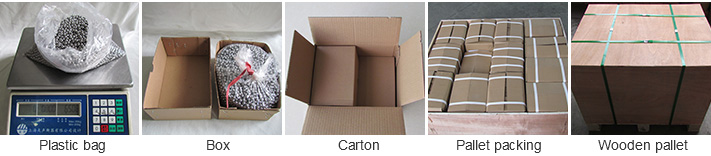
| Packing | Carton / Plastic bag / Custom |
| Condition | Clean and dry |
| Delivery Time | Stock available for standard sizes or production based |


Tel: 0086-519-81181030*606
Fax: 0086-519-81181083
Address: No.202,Yangjia tou, Nanzhai, Xueyan town, Wujin, Changzhou, China 213178, Changzhou, Jiangsu
Contact: Nicky Yang
Mobile: +86-15995017229
Email: nicky@stw-industrial.com
 TO SHARE:


 +86-15995017229