Brass balls are widely used in valve, hardware, decorative and general industrial ball applications requiring corrosion resistance, machinability and stable metallic appearance.
Common brass ball materials include H62 (CuZn38 / C27200) and H65 (CuZn35 / C26800) brass alloys.
 To Share:


Brass balls are commonly used in valve balls, hardware balls, decorative balls and low-load industrial ball applications.
Brass balls are manufactured from copper-zinc alloy materials such as H62 (CuZn38 / C27200) and H65 (CuZn35 / C26800) brass.
Compared with standard carbon steel balls, brass balls provide better corrosion resistance, non-magnetic performance and stable metallic appearance, making them suitable for valve balls, hardware balls and decorative applications.
Brass balls also provide good machinability and moderate mechanical strength for general industrial applications.
Due to their relatively lower hardness compared with bearing steel balls, brass balls are generally not recommended for high-load rolling element bearing applications.
Brass balls are commonly selected where corrosion resistance, appearance and non-magnetic properties are more important than high load capacity.

| Item | Specification |
| Material | Brass |
| Typical Materials | H62 (CuZn38 / C27200) / H65 (CuZn35 / C26800) |
| Structure | Solid brass ball |
| Size Range | 1 mm – 50.8 mm (larger sizes upon request) |
| Grade | Depending on ball application requirements |
| Density | Approx. 8.4 – 8.7 g/cm³ |
| Hardness | Approx. 70–110 HV (softer than bearing steel) |
| Corrosion Resistance | Good in atmospheric and freshwater environments; not suitable for strong acids, ammonia or sulfide media |
| Electrical Conductivity | Moderate (~28% IACS depending on alloy type) |
| Magnetic Properties | Non-magnetic |
| Temperature Recommendation | Suitable for low-to-moderate temperature applications; continuous service above 250°C is generally not recommended |
| Design Note | Softer than bearing steel balls; not suitable for high-load or high-wear rolling applications |
| Surface Appearance | Metallic gold color |
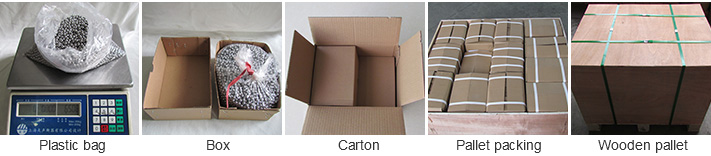
| Packing | Carton / Plastic bag / Steel drum / Custom |
| Condition | Clean and dry or lightly oiled |
| Delivery Time | Stock available for standard sizes or production based |
| Ball Type | Equivalent Materials | Main Features | Typical Ball Applications |
| H62 Brass Balls | CuZn38 / C27200 | Good corrosion resistance and stable appearance | Valve balls, decorative balls, hardware balls |
| H65 Brass Balls | CuZn35 / C26800 | Better ductility and softer structure | Decorative balls, low-load industrial balls |
Brass balls are generally selected for valve, hardware and decorative applications rather than high-speed precision rolling bearing systems.


Tel: 0086-519-81181030*606
Fax: 0086-519-81181083
Address: No.202,Yangjia tou, Nanzhai, Xueyan town, Wujin, Changzhou, China 213178, Changzhou, Jiangsu
Contact: Nicky Yang
Mobile: +86-15995017229
Email: nicky@stw-industrial.com
 TO SHARE:


 +86-15995017229