

 Home > News
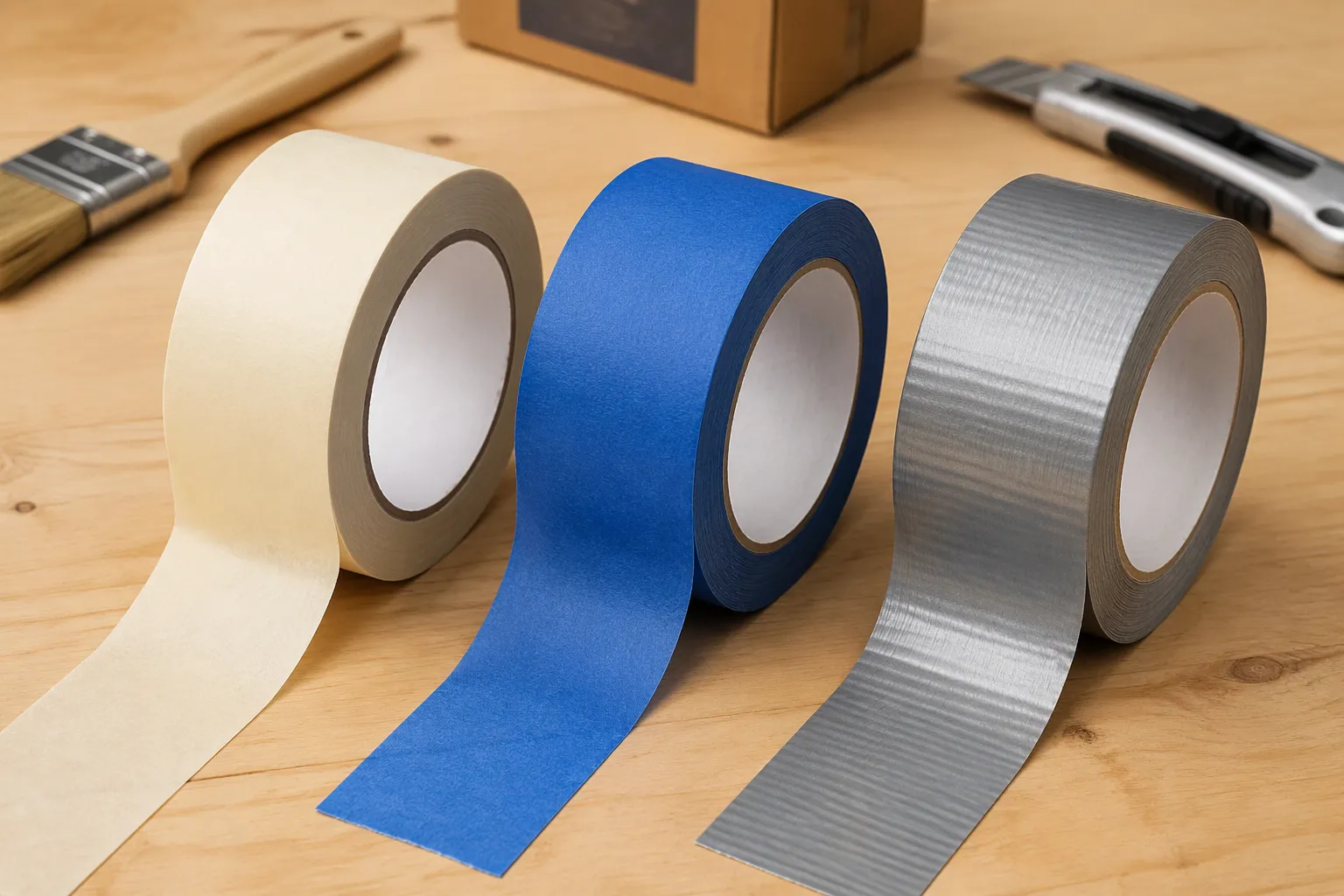
Three rolls sit in your hands in the tape aisle. One is masking tape, one is painter's tape, and one is duct tape. Which one goes in the cart?
The answer depends on the job. Painter's tape handles painting projects. Duct tape handles heavy-duty repairs. Masking tape covers everyday general use.
This post compares performance, cost, and best uses for each tape. You will see where each roll fits best. Then you can choose with confidence and finish the project without a second trip to the store.
Painter's tape creates clean paint lines and removes easily without damaging surfaces.
Duct tape provides the strongest hold for repairs, outdoor fixes, and heavy loads.
Masking tape is the cheapest option for everyday tasks like labeling and bundling.
Match the tape to the job: painter's tape for painting, duct tape for tough repairs, masking tape for general use.
Keep all three tapes on hand to handle any project without a second trip to the store.
Test tape on a small hidden area first when working with delicate or unfamiliar surfaces.
Remove tape on time to avoid sticky residue and surface damage.
The table below lines up the three tapes across the traits that matter most on a job site or at a craft table. Each row shows where a tape naturally fits, not where it fails.
Trait | Masking Tape | Painter's Tape | Duct Tape |
|---|---|---|---|
Adhesion | Strong pressure-sensitive bond; rubber-based glues give the greatest grip | Low-tack options for delicate surfaces; medium and high variants exist | Strongest adhesive of the three |
Residue | Releases cleanly when removed on time | Formulated for clean, residue-free removal | Can leave residue on delicate surfaces |
Strength | Moderate; crepe paper backing tears by hand | Moderate; built for surface protection | Highest; cloth-backed and polyethylene-coated |
Temperature resistance | Special high-temp versions reach 260°C (500°F) | Not rated for high heat | |
Best use | General painting, labeling, bundling, light packaging | Crisp paint lines and surface masking | Repairs, bundling, outdoor quick fixes |
Cost | Most economical per roll | Slightly higher than masking tape | Highest per roll |
Read each column as a job description, not a scorecard. Adhesion tells you how firmly the tape grips a surface. Residue tells you how cleanly it lifts away afterward. Strength covers tear resistance and holding power under load. Temperature resistance shows the heat ceiling for demanding work. Best use names the task each tape was built for. Cost gives the relative price per roll.
The cost column deserves a closer look. GTSE Group lists a general-purpose masking tape two-pack at $3.47, or $1.74 per roll, and a black duct tape at $12.00. Tape Jungle lists painter's tape starting at $7.00 for its Blue Painters Tape (24900), with standard blue painting tape at $2 per roll in bulk. Those figures show the spread clearly: masking tape sits at the low end, painter's tape in the middle, and duct tape at the top.
Masking tape is the pick for everyday tasks that need a reliable hold and a clean tear by hand. Painter's tape is the pick for painted walls, trim, and any surface where a sharp line matters. Duct tape is the pick for repairs that demand strength, weather holding, and a bond that stays put.
Keep this rule in mind: match the tape to the surface and the duration. Delicate surfaces and short indoor projects favor low-tack painter's tape. Outdoor projects and heavy holding favor duct tape. General labeling, bundling, and light packaging favor masking tape. Each roll earns its place when the job calls for it.
Masking tape is a pressure-sensitive tape built on a crepe paper carrier with a rubber-based glue. The paper backing gives the roll its familiar stretch and its ability to tear cleanly by hand, with no dispenser or scissors required. Gelly produces this tape in a normal-temperature version for general work and a high-temperature version for demanding industrial jobs.
One naming point deserves attention. Some product lines, including Gelly's, market masking tape as painter's tape. The two are related, yet they differ in tack level and in how cleanly they lift away. Masking tape grips harder and is built for holding, labeling, and general protection. True painter's tape uses a lower-tack adhesive for delicate painted surfaces. Knowing this distinction helps you grab the right roll.
General-purpose masking tape shines in temporary holding tasks. ABRO USA lists labeling boxes and materials, bundling wires and cables, sealing packages, and marking parts during repairs or assembly among its ideal jobs. The tape also suits craft stencils, temporary markers, and holding items together while glue dries.
Labeling boxes and materials
Bundling wires and cables
Sealing light-duty packages
Marking parts during repairs or assembly
Temporary holding and craft stencils
Gelly's normal-temperature masking tape covers general painting, light packaging, labeling, and bundling. It adheres strongly to walls, furniture, and glass, and custom printing is available for branded labels. The high-temperature version is rated up to 260°C (500°F), which suits automotive painting, powder coating, and aerospace work. Hopelightcn notes that polyimide and silicone high-temperature tapes also reach 500°F (260°C), confirming this ceiling as a recognized benchmark for demanding bake cycles.
Masking tape pairs a strong adhesive with a lighter paper backing. That combination delivers a firm grip on most surfaces, yet the backing can wrinkle when wet and may leave residue if left in place too long. Treat these traits as fit guidance: use masking tape for the right job, keep runs short, and remove it on schedule. For wet or long-duration masking, a low-tack painter's tape is the better match.
Cost is where masking tape earns its everyday reputation. Tape Jungle notes that masking tape is cheaper than painter's tape, and Frog Tape explains that painter's tape costs more upfront but reduces touch-up work. For labeling, bundling, and light packaging, masking tape delivers reliable performance at the lowest price per roll. That value makes it the roll to keep within easy reach for routine tasks.
Painter's tape is a masking-style tape built around a low-tack adhesive. That lower grip is the whole point. The tape holds firmly enough to block paint, then lifts away without pulling up the finish underneath. The adhesive is formulated for clean removal and crisp paint lines, which is why the roll shows up on trim, baseboards, and freshly painted walls.
The low-tack design also makes painter's tape easier to remove than masking tape. It resists paint bleed better as well, so the edge stays sharp instead of feathering under the paper. Tape Jungle notes that painter's tape leaves clean, straight lines, is easy to find, and won't pucker or buckle no matter what type of paint you use. Those traits explain why it is the safer choice for most painting work.
Painter's tape earns its keep on home-improvement projects. Tape Jungle reports that it is the best option for most home-improvement needs, with glass and canvas as the exceptions where masking tape fits better. The same source lists several practical advantages for painting and crafting projects:
Leaves clean, straight lines
Is easy to find
Won't pucker or buckle no matter what type of paint you use
Can be left on a surface for several days after painting and still be removed without any problems
Product lines cover a wide range of jobs. Tape Jungle lists Blue Painters Tape (24900) with UV resistance for up to 14 days outdoors. Super Blue USA Painters Tape (SB621) can be cleanly removed for up to 21 days. AquaMask (MTAMI) works with water-based and solvent-based paints and withstands temperatures up to 225°F for 30 minutes.
Painter's tape costs slightly more than masking tape per roll. Tape Jungle lists Blue Painters Tape (24900) starting at $7.00, and notes that standard blue painting tape runs $2 per roll when bought in bulk. Specialty rolls climb higher, with AquaMask Medium Grade Painters Masking Tape (MTAMI) starting at $192.00.
That premium buys fewer touch-ups and a cleaner edge. For a painting project, the extra dollar or two per roll is worth it. The tape protects the surface, releases on schedule, and keeps the line sharp. Save the economy roll for labeling and bundling, and reach for painter's tape when the finish is the point.
Duct tape is a three-layer tape built for holding power. A rubber-based adhesive sits on top, a cotton, polyester, or fiberglass scrim provides the tensile strength in the middle, and a polyethylene film backing seals out water on the outside. According to etei.com, the thread count of the scrim defines how easily the tape tears, and the polyethylene coating gives the roll its waterproof shell and its familiar black or white color.
That construction explains the tape's reputation. The rubber-based adhesive is pressure sensitive, so it bonds on contact without heat or solvent. etei.com describes these adhesives as aggressive from the first touch and suited to temporary through long-standing holding. The cloth core adds a strength no paper-backed tape can match, which is why duct tape carries the heaviest loads of the three.
Duct tape belongs on repairs, bundling, outdoor quick fixes, and heavy-duty holding. apg-go.com groups its applications by setting. Packaging and shipping operations use standard-duty rolls for box sealing and bundling. Manufacturing floors reach for heavy-duty options with 50+ lb/in tensile strength and 80+ oz/in adhesion to handle equipment fixes and temporary structural work. Outdoor projects call for UV-resistant formulations rated for 6+ months of service.
The same source notes where duct tape fits less well. It struggles on silicone, Teflon, heavily textured concrete, dusty surfaces, and cold substrates below 32°F. It is also designed for temporary to semi-permanent work, not permanent structural repairs. For delicate painted surfaces and crisp paint lines, painter's tape remains the right tool. Duct tape earns its place where strength and weather holding matter most.
The numbers back up the heavyweight label. etei.com reports that general-purpose duct tape rates 40 to 60 oz/in in peel adhesion, and high-adhesion types exceed 70 oz/in. Tensile strength runs 20–25 lbs/in width for general-purpose tape, 30–45 lbs/in for industrial grades, and up to 70 lbs/in for reinforced fiberglass versions. Standard rolls handle 40°C to 70°C (104°F to 158°F), and premium types reach about 93°C (200°F) for short periods.
Cost runs higher per roll than either paper tape, and the price buys heavier work. A roll seals a cracked bin, bundles a load of lumber, or patches a tarp through a storm. apg-go.com advises storing rolls in a cool, dry place between 60°F and 80°F, where most duct tapes keep a 12–18 month shelf life. Buy one roll for the repair kit and save the paper tapes for painting and labeling.
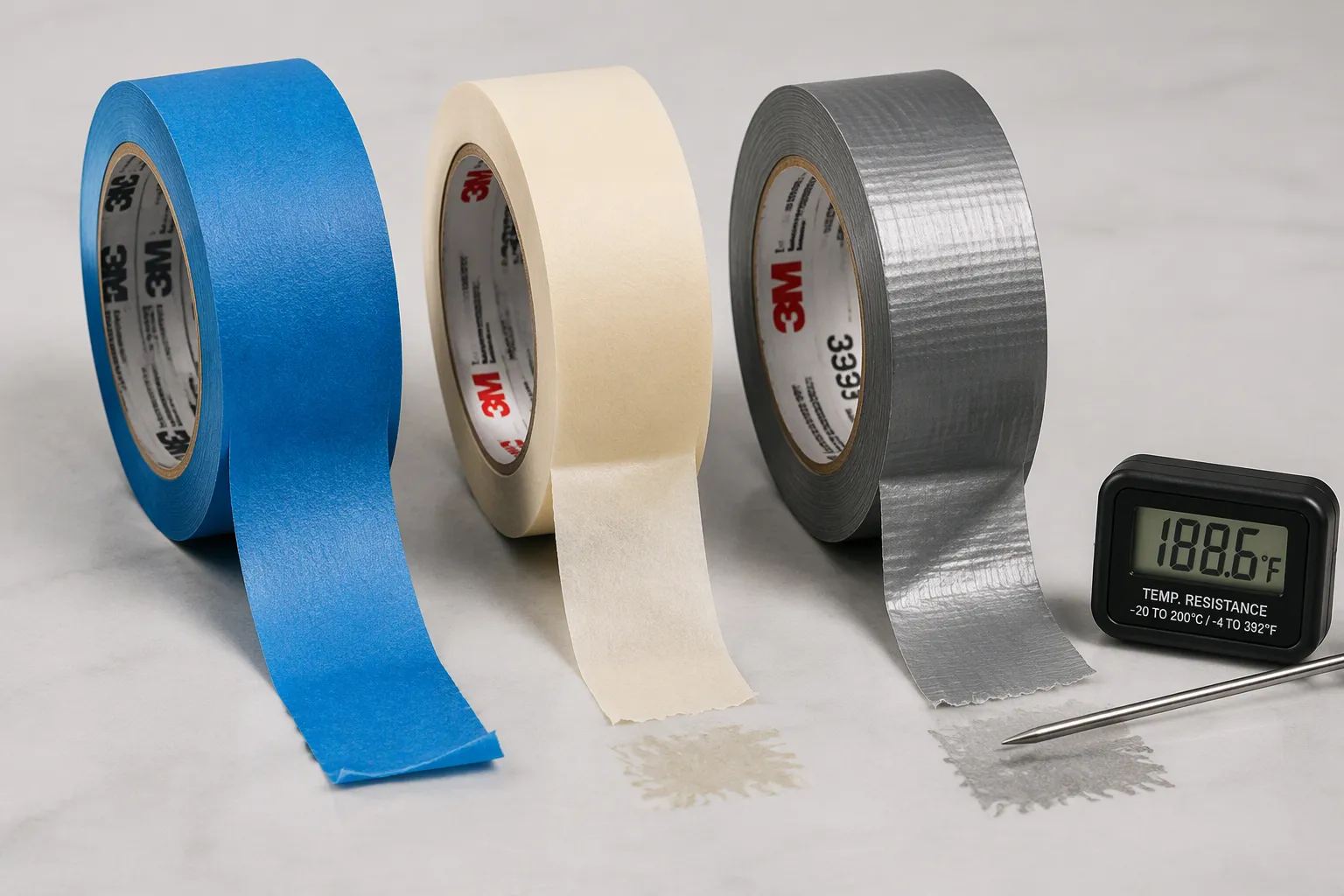
Adhesion separates the three tapes into a clear order. Duct tape holds the strongest bond of the group. Shurtape explains that both laminated and co-extruded duct tapes are designed for strong, permanent and temporary bonds. The middle position belongs to the crepe paper roll. Tape Jungle notes that inexpensive masking tape generally has a stronger adhesive than painter's tape. Painter's tape ranks lowest by design, with a low-tack adhesive built for easy removal.
Residue follows the same pattern in reverse. Painter's tape is formulated for clean removal from a variety of surfaces even after several days, according to FrogTape. That formulation dates back to the 1950s, when painter's tape was developed to eliminate the damage and sticky residue left behind by the tape it replaced. The general-purpose paper roll can be trickier to remove cleanly and may leave a sticky residue behind. Duct tape bonds aggressively, so it can leave residue on delicate surfaces. Trimaco frames the trade-off in a side-by-side table:
Feature | Masking Tape | Painter's Tape |
|---|---|---|
Adhesive strength | High | Low |
Clean removal timeframe | Short | Long |
Surface safety | Adhesive may damage surfaces | Safe for most surfaces |
Three variables decide the outcome on a real surface: tack level, dwell time, and surface energy. A high-tack roll left in place for a week grips harder than the same roll lifted the same afternoon. Smooth glass releases easily. Fresh paint, wallpaper, and unfinished wood demand more care. The practical lesson is timing. Remove any paper tape on schedule, and match the tack level to the surface. Delicate finishes call for low-tack painter's tape. General holding tasks suit the stronger grip of the everyday paper roll. Test a small, hidden patch first when the surface is unfamiliar.
Strength favors duct tape without question. Its cloth scrim and polyethylene coating carry loads that paper-backed tapes cannot match. Tensile strength for general-purpose duct tape runs 20 to 25 lbs per inch of width, per etei.com, and reinforced fiberglass versions reach up to 70 lbs per inch. A roll at that upper figure can bundle lumber or strap a heavy load without stretching. The two paper tapes share a crepe paper carrier, so both tear by hand and both suit surface protection rather than structural holding. Painter's tape adds no strength advantage over the general-purpose roll. Its value lies in clean release, not load bearing.
Temperature resistance tells a different story. Standard paper tapes handle normal indoor conditions well. Duct tape covers 40°C to 70°C (104°F to 158°F) in standard rolls, with premium types reaching about 93°C (200°F) for short periods. Painter's tape variants top out at lower ceilings; AquaMask withstands 225°F for 30 minutes. Demanding heat work needs a specialized roll. Gelly's high-temperature version is rated up to 260°C (500°F), which covers automotive painting, powder coating, and aerospace bake cycles. That rating places a paper tape at the top of the heat range among the three. Heat softens adhesive and weakens the bond, so a roll rated for the process temperature stays put through the full cycle. For a bake cycle or a powder-coating line, the high-temperature roll is the fit.
Safety considerations vary by formulation and by job. Adhesive chemistry drives volatile organic compound content, and low-VOC options exist across all three tape types. Check the product data sheet for the VOC profile when indoor air quality matters, such as in occupied buildings or enclosed workspaces. The label and the safety data sheet list the relevant figures for each product. Ventilation helps during long masking sessions, and gloves protect hands from aggressive adhesives.
Compliance requirements depend on the application. Flammability ratings, adhesion test standards, and labeling rules apply differently to construction, automotive, and aerospace work. Buyers in regulated industries should confirm that the roll carries the documentation their process requires. Gelly offers custom printing for branded labels, which helps with traceability on a job site.
Storage and handling round out the safety picture. Duct tape keeps best in a cool, dry place, per apg-go.com guidance cited earlier. Paper tapes should stay away from moisture, which can wrinkle the backing. A dry shelf and a sealed container protect every roll. Rotate stock so older rolls get used first, since adhesive performance fades with age.
Painter's tape wins the painting job. Shurtape explains that painter's tape is manufactured to act as a barrier that keeps paint out. Some premium tapes carry specially formulated edge treatments that react with the water in latex paint to form a micro-barrier, sealing the edges and delivering extra-sharp lines for precision work. General purpose paper tape behaves differently. Shurtape notes that it is prone to pucker or wrinkle when it contacts latex paints, which lets paint seep under the tape.
Residue tells a similar story. Painter's tape offers a short-term bond so it can be removed cleanly without residue or damage, and its clean removal window can range from a few days to several weeks. General purpose paper tape offers a medium- to high-adhesion bond that is too aggressive for most surfaces and can damage them on removal or leave a sticky residue when left in place for a prolonged period.
Aspect | Painter's Tape | General Purpose Masking Tape |
|---|---|---|
Clean lines | Acts as a paint barrier; premium edge treatments seal edges for extra-sharp lines | Prone to pucker or wrinkle with latex paint, allowing seepage |
Residue | Short-term bond; clean removal from a few days to several weeks | Medium- to high-adhesion; can damage surfaces or leave sticky residue |
Masking Tape still has a place in crafting. It holds stencils, bundles supplies, and labels containers. For a painted finish, though, painter's tape is the safer pick.
Duct tape wins the repair and outdoor job. Its cloth scrim and polyethylene coating carry loads that paper-backed tapes cannot match, and its rubber-based adhesive bonds on contact. A roll seals a cracked bin, straps a load of lumber, or patches a tarp through a storm. Outdoor work favors UV-resistant formulations rated for extended service.
The paper roll fits the lighter side of this category. It handles light bundling, labeling, and temporary holding indoors. Keep it away from wet conditions, where the paper backing can wrinkle. For a repair that must hold against weather or weight, duct tape is the fit.
Cost per job starts with cost per roll. The paper roll is usually the most economical of the three. Painter's tape costs a bit more per roll, and that premium buys fewer touch-ups and a cleaner edge. Duct tape costs more per roll, yet it does heavier work, so one roll covers repairs that would take several paper rolls to attempt.
The smarter measure is cost per completed job. A labeling task needs one inexpensive paper roll. A painted wall needs painter's tape to avoid rework. A structural fix needs duct tape for holding power. Match the roll to the task, and the price per job stays low.
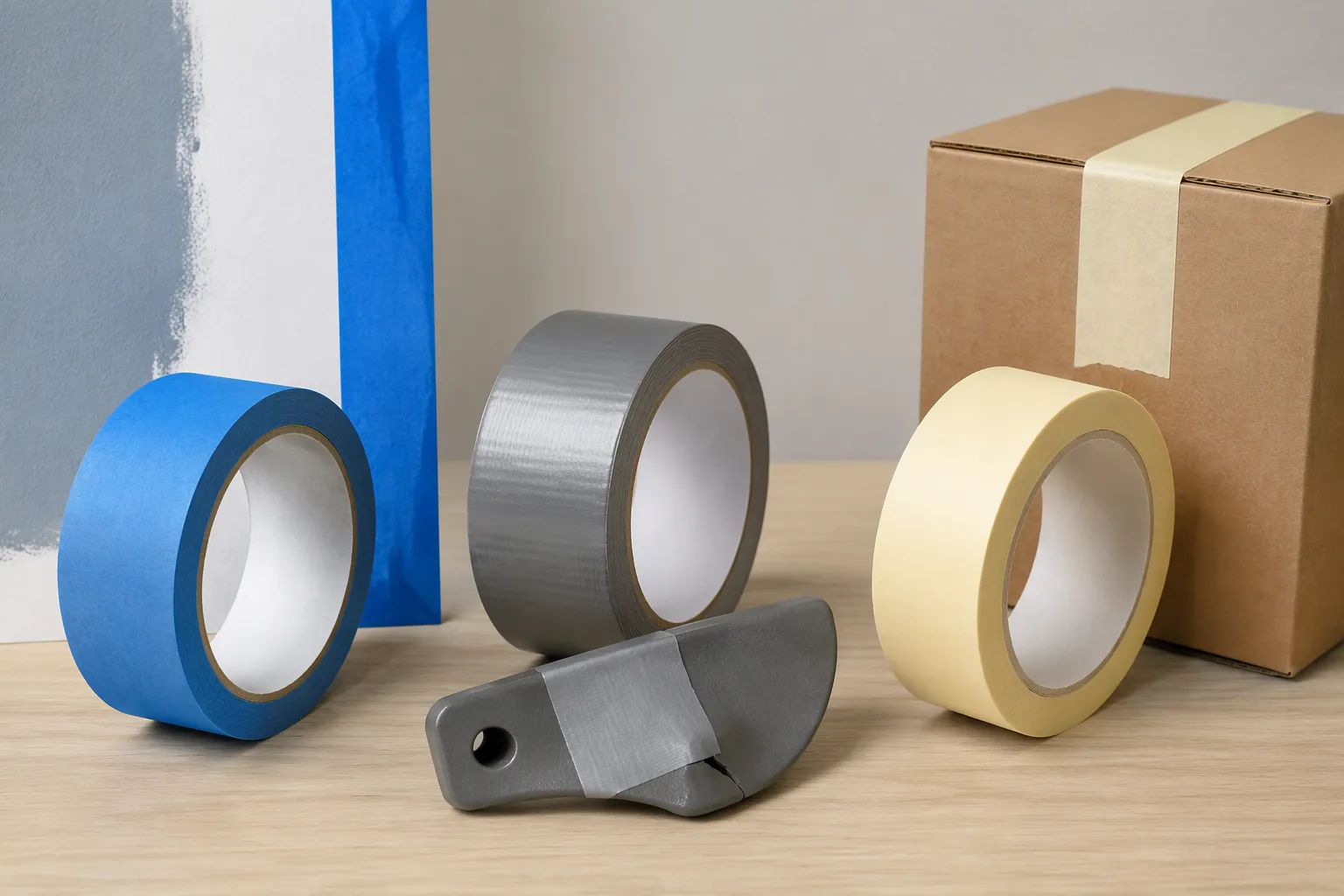
Each tape wins its own category. The final call comes down to the surface, the load, and the length of the job. Here is how the three rolls split the title.
Painter's tape takes the painting crown. Its low-tack adhesive holds a sharp edge and lifts away without pulling up the finish. Reviewed.com tested a range of rolls and found the bright green FrogTape Multi-Surface Painter's Tape to be the clear winner. The test results show why:
It created very clean paint lines, stayed put against the toughest scenarios, and left no residue behind.
It has less give than other tapes, so it needs a harder tug off the roll, yet it tears easily with a nice edge once measured.
It applied smoothly to drywall and crown molding and formed an even layer flush with the wall.
After the paint dried on both surfaces, the tape had not budged one bit.
It delivered the cleanest lines in the test and ranked among the strongest adhesives that did not damage surfaces.
Reviewed.com priced that roll at $6.78 and named it the best overall pick for ease of use, a durable yet gentle adhesive, and extremely clean lines. The lesson for any painting project is simple. Pay the small premium for a true painter's tape, and the finish comes out sharp the first time.
Duct tape wins the repair and outdoor category. BobVila.com explains that duct tape earns its reputation through high durability, tensile strength, adhesive strength, and water resistance. The tape stretches during application to form a strong seal, then resists shifting, sagging, cracking, and breaking once in place. Its aggressive adhesive bonds to brick, stone, metal, wood, plastic, and cardboard. The water-resistant backing and adhesive make it a natural fit for outdoor fixes.
BobVila.com tested weather resistance by attaching tapes to plastic and wood in direct sun, with the plastic reaching over 140 degrees Fahrenheit on one hot afternoon, cold overnight temperatures just above freezing, and several rounds of sprinkler spray. Testers removed the tape after 6 days and checked the bond and any residue. The strongest roll in that test, Gorilla Black Gorilla Tape, tore evenly every time and stuck well even when wet. A 3M Contractor Grade roll held adhesion for up to 30 minutes at 200 degrees Fahrenheit. For a repair that must survive weather, weight, and time, duct tape is the fit.
Masking Tape takes the everyday category on versatility and value. It labels, bundles, seals light packages, and holds parts during assembly, all at the lowest price per roll. Future Market Insights reports that general-purpose masking tape held a 55.0% share of the market in 2026, and paper-backed tape accounted for 70.0% of that market. Offline retail carried 65.0% of sales. Those figures show how deeply this roll has settled into daily work.
Evidence | Detail |
|---|---|
General purpose masking tape share (2026) | 55.0% share |
Paper backing share (2026) | 70.0% share |
Offline retail share (2026) | 65.0% share |
Everyday use case | Routine wall painting and trim work keep this grade in frequent use across homes and work sites |
Contractor preference | Simple rolls that tear cleanly and peel off without surface damage |
Handling benefit | Easy tearing and flexible handling across walls and curved surfaces |
Painting benefit | Protects surfaces and creates cleaner paint edges, reducing touch-up work after coating jobs |
Future Market Insights notes that contractors prefer simple rolls that tear cleanly and peel off without surface damage. Easy tearing and flexible handling help across walls and curved surfaces. The tape also protects surfaces and creates cleaner paint edges, which cuts touch-up work after a coating job. That mix of low cost and broad utility makes it the roll to keep within arm's reach.
No single tape loses this contest. Each one owns a job the others cannot do as well. The smart move is to keep all three on hand: painter's tape for clean lines, duct tape for tough repairs, and masking tape for the everyday tasks in between. Stock the shelf by project type, and the right roll is always within reach.
No single roll takes every job. The right tape matches the task in front of you. That is the real answer to the tape aisle question.
Three quick picks cover most projects. Painter's tape delivers clean paint lines and easy removal. Duct tape handles tough repairs and outdoor holding. Masking tape serves everyday labeling, bundling, and light packaging at the lowest cost.
Keep all three on hand. A simple buying tip makes stocking easy: shop by project type. Buy painter's tape before a painting job, duct tape for the repair kit, and masking tape for daily tasks. Each roll earns its shelf space.
They are related, not identical. Some product lines, including Gelly's, market masking tape under the painter's tape name. The two differ in tack level and clean removal. Masking tape grips harder for holding and labeling. True painter's tape uses a lower-tack adhesive for delicate painted surfaces.
It depends on the version. Gelly's normal-temperature masking tape suits general painting and light packaging. The high-temperature version is rated up to 260°C (500°F). That ceiling covers automotive painting, powder coating, and aerospace bake cycles, where the tape must release cleanly after the oven.
No. The crepe paper carrier tears cleanly by hand. That trait saves time on ladders, at craft tables, and during quick labeling jobs. Tear a strip against the roll edge for a straight cut, or pull at an angle for a shaped piece.
Timing matters more than brand. Painter's tape offers a clean removal window that runs from a few days to several weeks. Masking tape prefers shorter runs. Remove any paper tape on schedule, and test a hidden patch first when the surface is unfamiliar.
Not well. Standard duct tape covers roughly 40°C to 70°C (104°F to 158°F), and premium types reach about 93°C (200°F) for short periods. For a bake cycle or a powder-coating line, reach for a high-temperature paper tape instead.
Yes. Gelly offers custom printing on its masking tape for personalized branding. Printed rolls work well for labeled boxes, bundled cables, and job-site traceability. The tape still tears by hand and adheres strongly to walls, furniture, and glass.
Start with masking tape. It labels, bundles, and seals light packages at the lowest cost per roll. Switch to painter's tape when a painted edge must stay sharp. Switch to duct tape when the bond must carry weight or survive weather.





 中文版
 English