中文版
中文版 English


Choosing the right packing adhesive tape can make or break your move. You want a tape that matches your box weight, size, and surface. Look for strong adhesion, the right width and thickness, and durability. Always pick a tape that fits your shipping or moving needs for best results.
Key Takeaways
Pick packing tape by looking at the box weight and surface. Use heavy-duty tape for boxes that are heavy. Use lighter tape for boxes that are small.
Pick the right adhesive type. Hot melt tape is good for regular cardboard. Acrylic tape is better if you need to store things for a long time.
Think about eco-friendly choices. Compostable and recyclable tapes help cut down on waste. These tapes are better for the environment.
Key Factors for Packing Adhesive Tape Selection
Adhesion and Surface Compatibility
You need packing adhesive tape that sticks well to boxes. Some tapes do not work on every box surface. Recycled cardboard can be hard for some adhesives to stick to. Here is what you should know about different adhesive types:
Hot melt adhesives stick fast and hold tight on regular cardboard. These are good for most packing tape jobs.
Acrylic adhesives handle sunlight and temperature changes better. If you store boxes for a long time or ship them far, pick this type.
Natural rubber tape works even in tough conditions. It sticks to many surfaces, even rough or dusty ones.
If you use recycled cardboard, choose tapes with recycle compatible adhesives. These packing adhesive tapes help keep boxes recyclable and avoid recycling problems. Water-based adhesives also seal and label cardboard boxes well.
Tip: Always check if your tape is labeled for moving or storage. These tapes usually stick better and work on more surfaces.
Tape Material and Thickness
The material and thickness of packing tape are important. Polypropylene and PVC are common materials. Polypropylene is strong and cheap. PVC is thicker and quieter when you pull it off the roll. The right thickness helps tape hold up during shipping and moving.
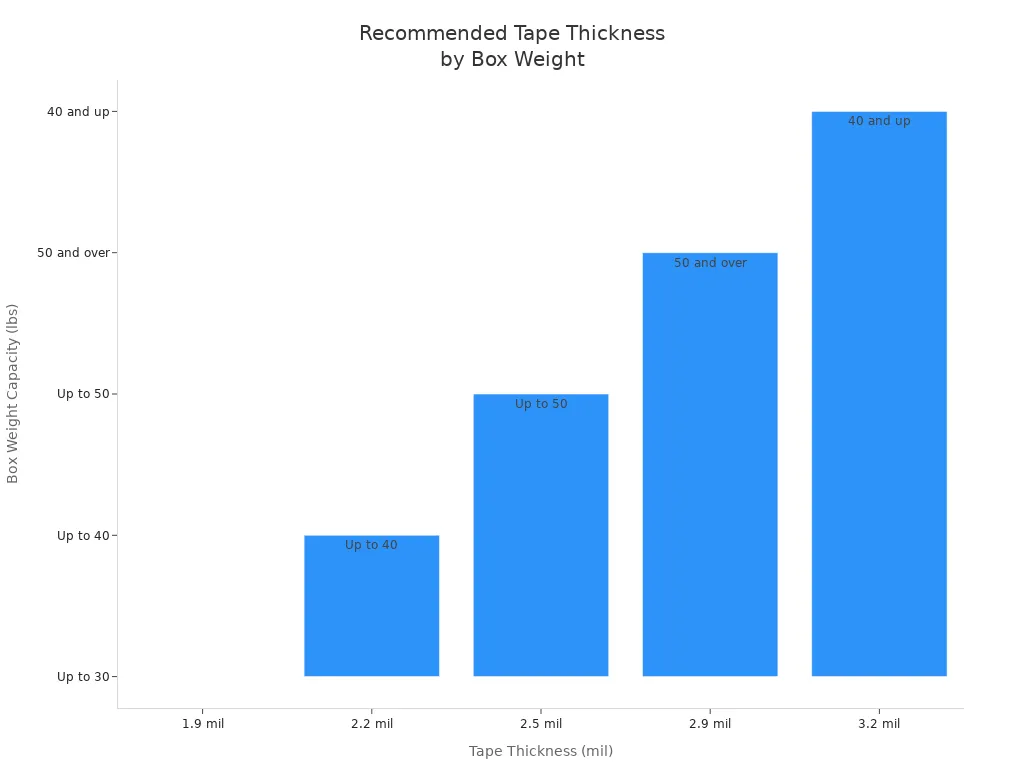
Here is a quick guide to match tape thickness to box weight:
| Tape Thickness (mil) | Box Weight Capacity (lbs) |
|---|---|
| 1.9 mil | Up to 30 |
| 2.2 mil | Up to 40 |
| 2.5 mil | Up to 50 |
| 2.9 mil | 50 and over |
| 3.2 mil | 40 and up |
For heavy boxes, use heavy duty packing adhesive tapes with 2.5 mil thickness or more. For lighter boxes, thinner tape works fine. Always match tape width to box size. Wider tape covers more area and supports big or heavy packages.
Note: High-quality tape and careful use make packages safer. Press tape down firmly and seal all edges.
Temperature Resistance and Durability
Shipping and storage conditions can change quickly. You need packing adhesive tapes that stands up to heat, cold, and humidity. Temperature resistance is important if packages face extreme weather or long trips.
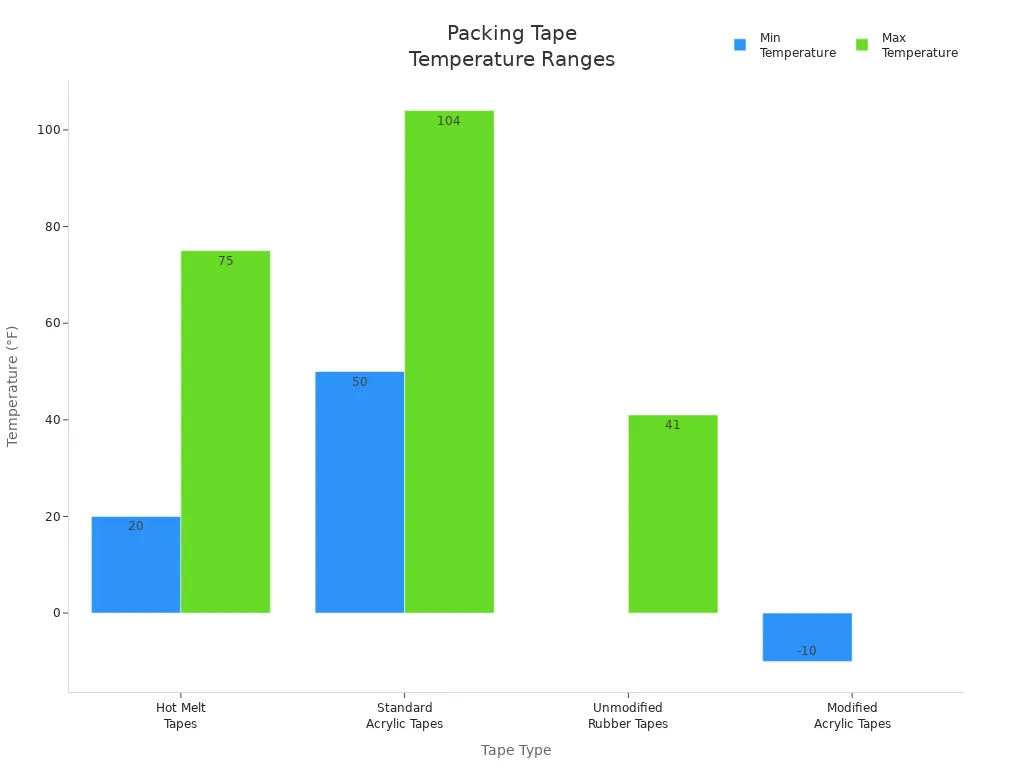
Here is how common tapes work in different temperatures:
| Tape Type | Temperature Range (°F) | Notes |
|---|---|---|
| Hot Melt Tapes | 20°F to 75°F | Good for most packing and storage |
| Up to -20°F | Works in cold storage | |
| Standard Acrylic Tapes | 50°F to 104°F | Best for general use |
| Unmodified Rubber Tapes | Below 41°F | May lose stickiness |
| Modified Acrylic Tapes | -10°F and below | Great for cold environments |
High humidity can make some adhesives weaker. Moisture can get between tape and box and make the seal less strong. In dry places, some tapes might crack. Always think about durability before you choose tape for your job.
Pro Tip: If your packages will face tough conditions, pick tape with strong temperature resistance and durability. This helps boxes stay sealed until they arrive.
Types and Best Tape for Shipping and Moving

When you look for the best tape for shipping or moving, you will see many choices. Each type of packing adhesive tape works better for certain jobs. Let’s break down the main types and help you pick the right one for your boxes, packages, and shipping needs.
Pressure-Sensitive and Acrylic Tape
Pressure-sensitive tape is the most common packing tape you’ll find. You just press it onto the box, and it sticks right away. You don’t need water, heat, or any special tools. This tape saves you time and makes packing easy.
Pressure-sensitive tape bonds instantly. You can seal boxes fast, which helps when you have a lot to pack.
Acrylic tape works well for light and medium boxes. It handles changes in temperature and sunlight, so it’s good for boxes that might sit in storage or travel far.
If you pack heavy boxes or items that might shift during shipping, pressure-sensitive tape is a better choice than acrylic tape. Acrylic tape does not hold up well for heavyweight boxes.
Tip: For heavy duty packing tape jobs, always choose pressure-sensitive tape with strong adhesive. This keeps your boxes sealed, even if they get bumped or moved around.
Here’s a quick guide for matching tape to carton size and weight:
| Carton Type | Recommended Tape Type | Why It Works |
|---|---|---|
| Light/Small | Acrylic or pressure-sensitive | Easy to seal, holds up for short trips |
| Medium/Standard | Pressure-sensitive | Reliable for most moving and shipping |
| Heavy/Large | Heavy duty pressure-sensitive | Strong hold, resists shifting and tearing |
You should also think about the box material. Corrugated cardboard needs a tape with strong adhesive. Plastic cartons may need a special tape that sticks to smooth surfaces.
Water-Activated and Paper Tape
Water-activated tape, sometimes called WAT, is a favorite for sealing fragile items. You wet the tape, and it bonds with the cardboard to create a seal that’s tough to break.
Water-activated tape forms a permanent bond. This makes it perfect for fragile items or boxes that need extra protection.
You only need one strip to seal a box. Plastic packing tape often needs several strips, which can waste tape and leave gaps.
Paper tape is biodegradable and recyclable. It’s a smart choice if you want to lower your plastic footprint.
If you plan to store boxes for a long time or ship delicate items, water-activated tape is the best tape for the job. It keeps your packages safe and secure during transit.
Note: Water-activated tape is much stronger than regular plastic tape. You can trust it for long-term storage and shipping.
Double-Sided and Specialty Tape
Double-sided tape is not just for crafts. You can use it to seal pre-packed boxes and keep the seal hidden. This gives your packages a neat look, which is great if you want to impress customers or friends.
Specialty tapes help with tricky packing jobs. If you need to bundle items or secure pallets, look for tapes made for palletizing. These tapes stick fast and hold tight, even on odd-shaped packages.
Shurtape and other brands offer tapes for palletizing and bundling. They work for both light and heavy loads.
Specialty tapes are designed to keep packages secure during storage and shipping. They stick well to irregular shapes and surfaces.
Pro Tip: Use specialty tape for pallets or large shipments. It keeps everything together and prevents shifting.
Eco-Friendly Tape Options
Eco-friendly packing adhesive tape is becoming more popular. You can choose compostable tape, recyclable paper tape, or eco tape with water-based adhesives.
Compostable tape helps lower your carbon footprint. It breaks down naturally and does not harm the environment.
Eco tape is easy to recycle. It does not contain harmful chemicals, so it’s safer for you and the planet.
Paper tape is biodegradable and recyclable. It uses less material than plastic tape, which is better for sustainability.
If you want to make greener choices, eco-friendly tape is the best tape for moving and shipping. You may pay a little more up front, but you save money in the long run by reducing waste and building a better reputation for your business.
| Tape Type | Environmental Benefit | Cost Range (per roll) |
|---|---|---|
| Compostable Tape | Low carbon footprint | $3 - $7 |
| Eco Tape | Recyclable, no VOCs | $3 - $7 |
| Paper Tape | Biodegradable, recyclable | $3 - $7 |
| Standard Packing Tape | Not eco-friendly | $2 - $5 |
| Specialty Tape | Varies | $5 - $10+ |
Alert: Eco-friendly tape may cost more than regular packing tape, but it can save you money over time. You use less tape, create less waste, and help the environment.
When you choose packing adhesive tape, always match the tape to your box size, weight, and shipping conditions. Heavy boxes need strong tape. Fragile items need a secure seal. Cold storage calls for tape made for low temperatures. Eco-friendly tape helps you pack with less impact on the planet.
Tape Application Tips and Common Mistakes
Sealing Boxes Effectively
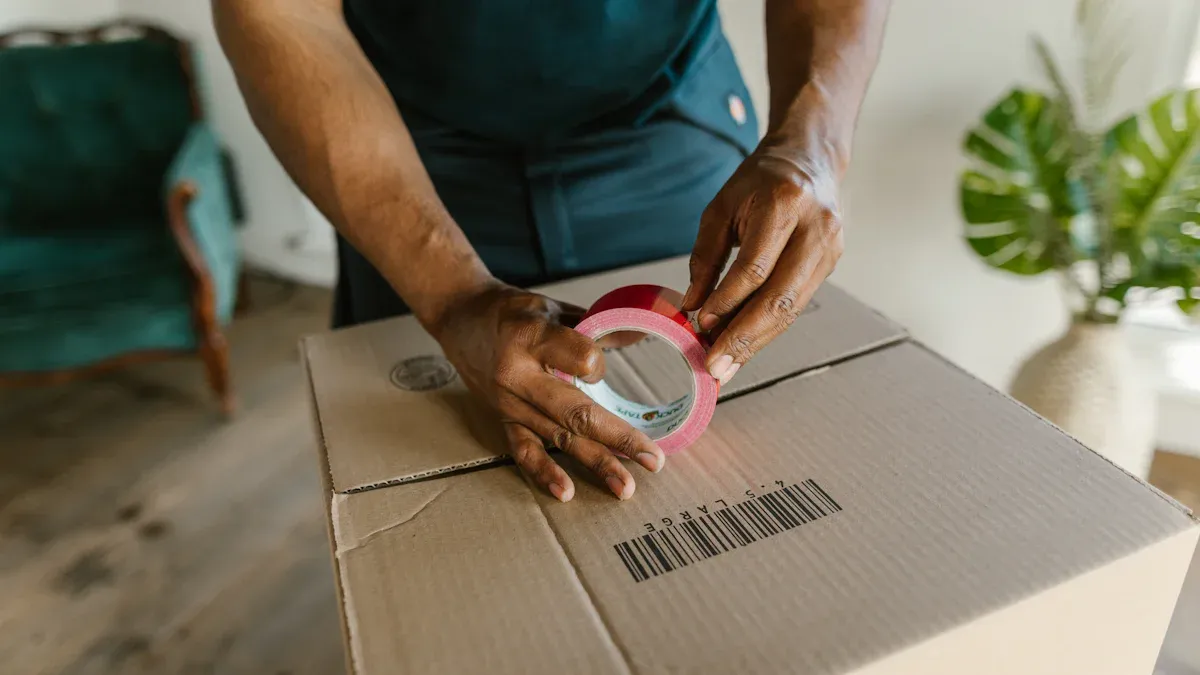
You want your boxes to stay closed and safe during the move. Here’s a simple way to seal boxes like a pro:
Start with the center seam. Place the tape so it runs 2-3 inches past each edge.
Press down firmly along the tape. This helps the adhesive stick and removes air bubbles.
Use the “H” method. Add tape to both side edges, wrapping it around the corners.
Check for loose ends or bubbles. Smooth out any spots that look weak.
For valuable or heavy items, add another layer of tape for extra security.
Tip: Use a tape dispenser. It makes sealing faster, keeps your tape straight, and saves your hands from getting tired.
If your box is wider than 16 inches, use a 3-inch wide tape. One strip of wide tape works better than several thin strips.
Cost-Saving Strategies
You can save money on packing tape by making smart choices:
Buy tape in bulk. This lowers the price per roll and means fewer trips to the store.
Choose poly tape for most jobs. It’s affordable and works with standard dispensers.
Pick the right tape width. Wide tape covers more area, so you use less tape overall.
Use narrow tape for small boxes. This prevents waste and cuts costs.
A good tape dispenser helps you use just the right amount of tape every time.
Mistakes to Avoid
Many people make the same mistakes when using box sealing tape:
Using tape that’s too thin. Thin tape can break or peel off, risking your package.
Picking the wrong tape for the job. Heavy duty packing tape is best for big or heavy boxes.
Taping over dirty or wet surfaces. Always clean and dry the box before taping.
Using old tape. Old tape may not stick well and can fail during shipping.
Ignoring the weather. Some tapes don’t work in extreme heat or cold.
Alert: Don’t skimp on tape. Cover all seams and edges to keep your boxes sealed tight.
When you choose packing tape, look at the packing adhesive tapes. Check the backing material too. Think about how heavy your box is. Pick tape that matches your shipping needs. Strong tape helps stop packages from breaking. This can help you save money. Eco-friendly tape makes your business look good. Follow these tips to seal boxes well. Your items will stay safe.
FAQ
What tape works best for heavy boxes?
You should use heavy-duty pressure-sensitive tape with at least 2.5 mil thickness.
Tip: Always check the label for "heavy-duty" before you buy.
Can I use regular office tape for moving boxes?
No, office tape is too thin and weak.
Packing tape is stronger and designed to seal boxes for shipping or moving.
How do I know if my tape is eco-friendly?
Look for labels like "compostable," "recyclable," or "water-based adhesive."
Eco-friendly tape often uses paper backing and avoids plastic.