Alumina ceramic balls provide excellent hardness, wear resistance and chemical stability, making them one of the most widely used ceramic ball materials for industrial and mechanical applications.
 To Share:


Alumina ceramic balls are widely used in industrial applications requiring wear resistance, corrosion resistance and non-metallic performance.
Alumina ceramic balls are manufactured from aluminum oxide ceramic materials, commonly including 92%, 95% and 99% alumina grades.
Compared with metallic balls, alumina ceramic balls provide excellent wear resistance, electrical insulation and chemical stability while maintaining relatively low cost among advanced ceramic materials.

| Item | Specification |
| Material | Alumina Ceramic |
| Typical Materials | Al₂O₃ 92% / 95% / 99% |
| Structure | Non-metallic ceramic material |
| Size Range | 0.5 mm – 100 mm |
| Grade | Depending on material and application |
| Density | Approx. 3.6 – 3.9 g/cm³ |
| Hardness | High hardness ceramic material |
| Corrosion Resistance | Excellent |
| Electrical Insulation | Excellent |
| Magnetic Properties | Non-magnetic |
| High Temperature Resistance | Excellent |
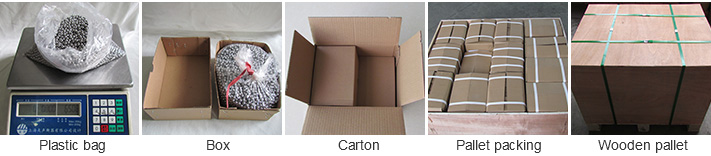
| Packing | Carton / Plastic bag / Custom |
| Condition | Clean and dry |
| Delivery Time | Production based |
| Material | Al₂O₃ (%) | SiO₂ (%) | Fe₂O₃ (%) |
| 92% Alumina | ≥92 | ≤5.0 | ≤0.3 |
| 95% Alumina | ≥95 | ≤3.0 | ≤0.2 |
| 99% Alumina | ≥99 | ≤0.5 | ≤0.1 |
Typical chemical composition range for alumina ceramic materials. Actual composition may vary depending on alumina grade and application requirements.


Tel: 0086-519-81181030*606
Fax: 0086-519-81181083
Address: No.202,Yangjia tou, Nanzhai, Xueyan town, Wujin, Changzhou, China 213178, Changzhou, Jiangsu
Contact: Nicky Yang
Mobile: +86-15995017229
Email: nicky@stw-industrial.com
 TO SHARE:


 +86-15995017229